
At certain points in the year, such as holidays, birthdays, or the conclusion of treatment, you may be offered a gift by a client. These gestures often come from a place of appreciation or connection and can range from a handwritten card or baked goods to items of greater monetary value. While well-intended, client gifts can raise important ethical considerations related to boundaries, power dynamics, and professional responsibility.
Having a clear, informed framework for responding to gifts allows you to acknowledge a client’s intention without compromising the therapeutic relationship. Familiarity with ethical standards helps you navigate these moments with consistency, transparency, and confidence.
Professional Guidelines and Ethical Standards
Most professional organizations, including the American Psychological Association (APA) and the National Association of Social Workers (NASW), address gift-giving within broader guidance on boundaries and dual relationships. Common principles include:
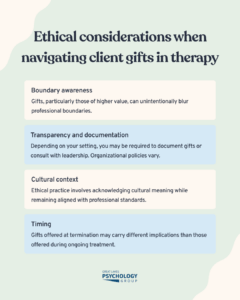
- Boundary awareness: Gifts, particularly those of higher value, can unintentionally blur professional boundaries or introduce a sense of obligation.
- Transparency and documentation: Depending on your setting, you may be required to document gifts or consult with leadership. Organizational policies vary.
- Avoiding pressure or expectation: Ethical standards emphasize that clients should never feel obligated to give gifts, and clinicians should not encourage or solicit them.
Factors That May Influence Ethical Decision-Making
When considering how to respond to a client gift, clinicians often account for several contextual factors:
- Value of the gift: Higher-value gifts typically warrant closer ethical consideration.
- Client vulnerability: Clients who are highly dependent, in acute distress, or early in treatment may be more susceptible to boundary complications.
- Cultural context: In some cultures, gift-giving is a customary expression of respect or gratitude. Ethical practice involves acknowledging cultural meaning while remaining aligned with professional standards.
- Timing: Gifts offered at termination may carry different implications than those offered during ongoing treatment.
Documentation and Professional Consultation
Across practice settings, clinicians commonly rely on established procedures when gifts are offered:
- Documentation: Recording the receipt and approximate value of gifts in accordance with agency or practice policy.
- Consultation: Discussing gifts with supervisors, colleagues, or consultation groups when ethical questions arise.
- Neutral acknowledgment: Responding in a way that recognizes the gesture without reinforcing obligation or altering the therapeutic frame.
Clinical Perspective
Client gifts can be meaningful moments that highlight connection and appreciation within the therapeutic relationship. Approaching them with ethical clarity supports both professional boundaries and client well-being. By staying grounded in professional guidelines, attending to context, and using consultation when needed, clinicians can navigate gift-giving in a way that maintains trust, transparency, and the integrity of the therapeutic process.
 6 Signs It’s Time to Revisit Your Professional Boundaries
 Recovering After a Client Crisis: Self-Care Strategies for Therapists
 Overcoming Procrastination as a Therapist: Practical Strategies for Clinical Practice